
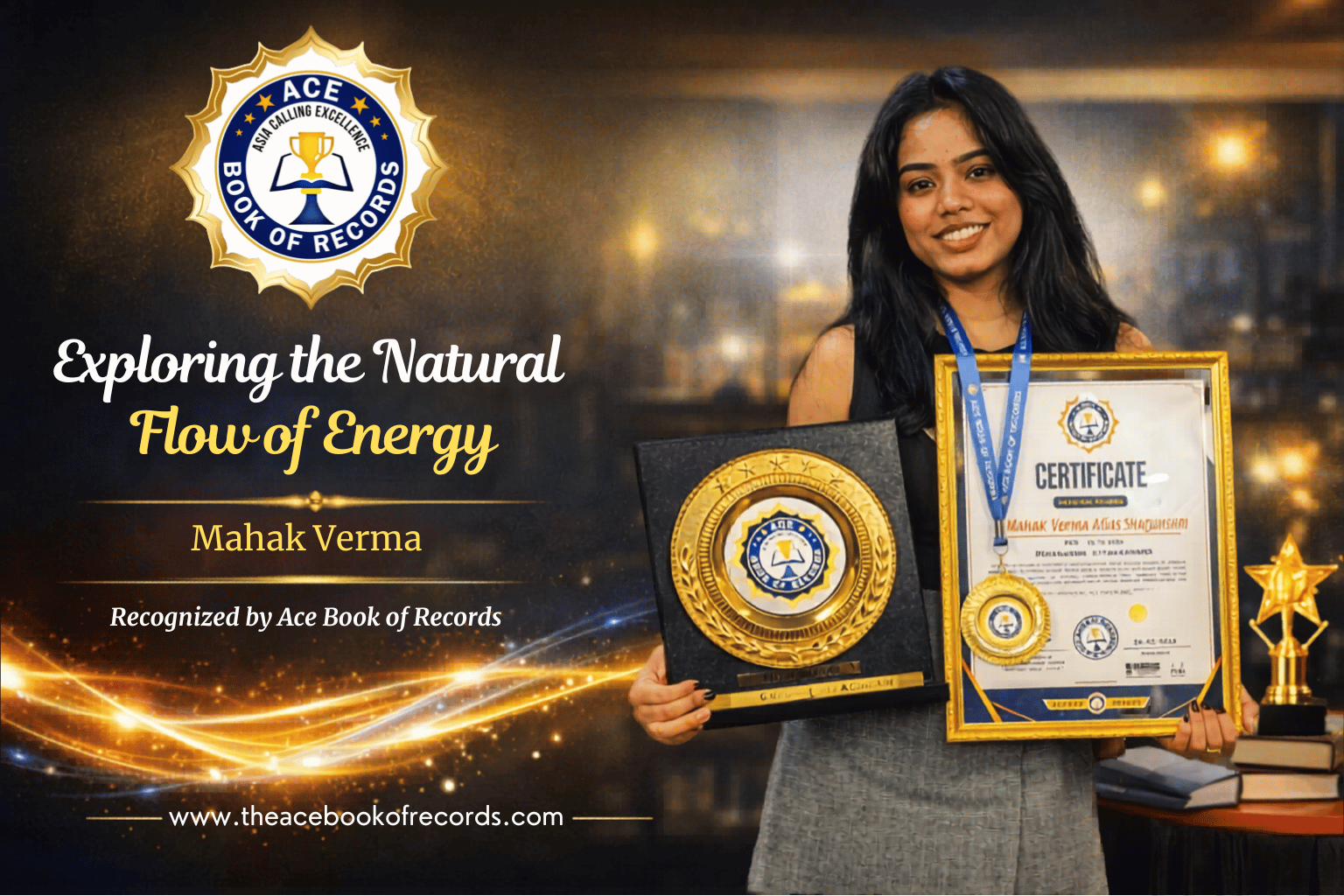
Exploring the Natural Flow of Energy
Mahak Verma’s Pioneering Research on Five Elements and Seven Chakras
Human curiosity has always sought to understand the invisible forces that shape our well-being. From ancient philosophies to modern wellness science, many traditions have explored how energy flows through the body and the environment.
In India, concepts like the Five Elements (Pancha Mahabhuta) and the Seven Chakras have long been associated with balance, awareness, and holistic health.
Building on these ideas, Mahak Verma, also known as Suryanshi, has conducted pioneering research titled “Natural Flow of Energy in the Five Elements and Seven Chakras.” For this unique exploration, the work has received National Record recognition by ACE Book of Records.
The research reflects thoughtful study and a deeper attempt to understand how natural energy systems may influence human consciousness, emotional balance, and overall well-being.
Understanding the Five Elements in Indian Philosophy
The concept of Five Elements, known in Sanskrit as Pancha Mahabhuta, forms an essential part of traditional Indian philosophy, Ayurveda, and yoga.
These five elements represent the fundamental components of nature:
- Earth (Prithvi) – stability and grounding
- Water (Jal) – adaptability and flow
- Fire (Agni) – transformation and energy
- Air (Vayu) – movement and breath
- Space (Akash) – expansion and consciousness
According to ancient Indian traditions, these elements exist both in nature and within the human body. Balance among them is believed to influence physical health, emotional stability, and mental clarity.
Mahak Verma’s research examines how the natural flow of energy within these elements may connect to human awareness and well-being.
The Role of the Seven Chakras in Energy Balance
Alongside the five elements, the concept of seven chakras plays a central role in many spiritual and wellness traditions.
Chakras are often described as energy centers within the body, each associated with different aspects of human experience, including emotions, intuition, creativity, and physical vitality.
The seven chakras traditionally include:
- Root Chakra – stability and grounding
- Sacral Chakra – creativity and emotion
- Solar Plexus Chakra – confidence and personal power
- Heart Chakra – compassion and connection
- Throat Chakra – communication and expression
- Third Eye Chakra – intuition and insight
- Crown Chakra – consciousness and spiritual awareness
The research conducted by Mahak Verma explores how these chakras interact with the natural flow of energy within the five elements, creating a framework for understanding balance in human life.
A Unique Research Perspective
What makes this research notable is its attempt to bring together ancient philosophical knowledge and modern inquiry. Rather than treating these concepts purely as spiritual ideas, the study examines them from a perspective of holistic understanding and human awareness.
The research focuses on themes such as:
- The relationship between natural elements and human energy flow
- How chakra balance may influence emotional and mental states
- The connection between environmental energy and personal well-being
- The broader role of energy awareness in everyday life
By exploring these ideas, the research encourages a thoughtful dialogue between traditional wisdom and modern curiosity.
Recognition by ACE Book of Records

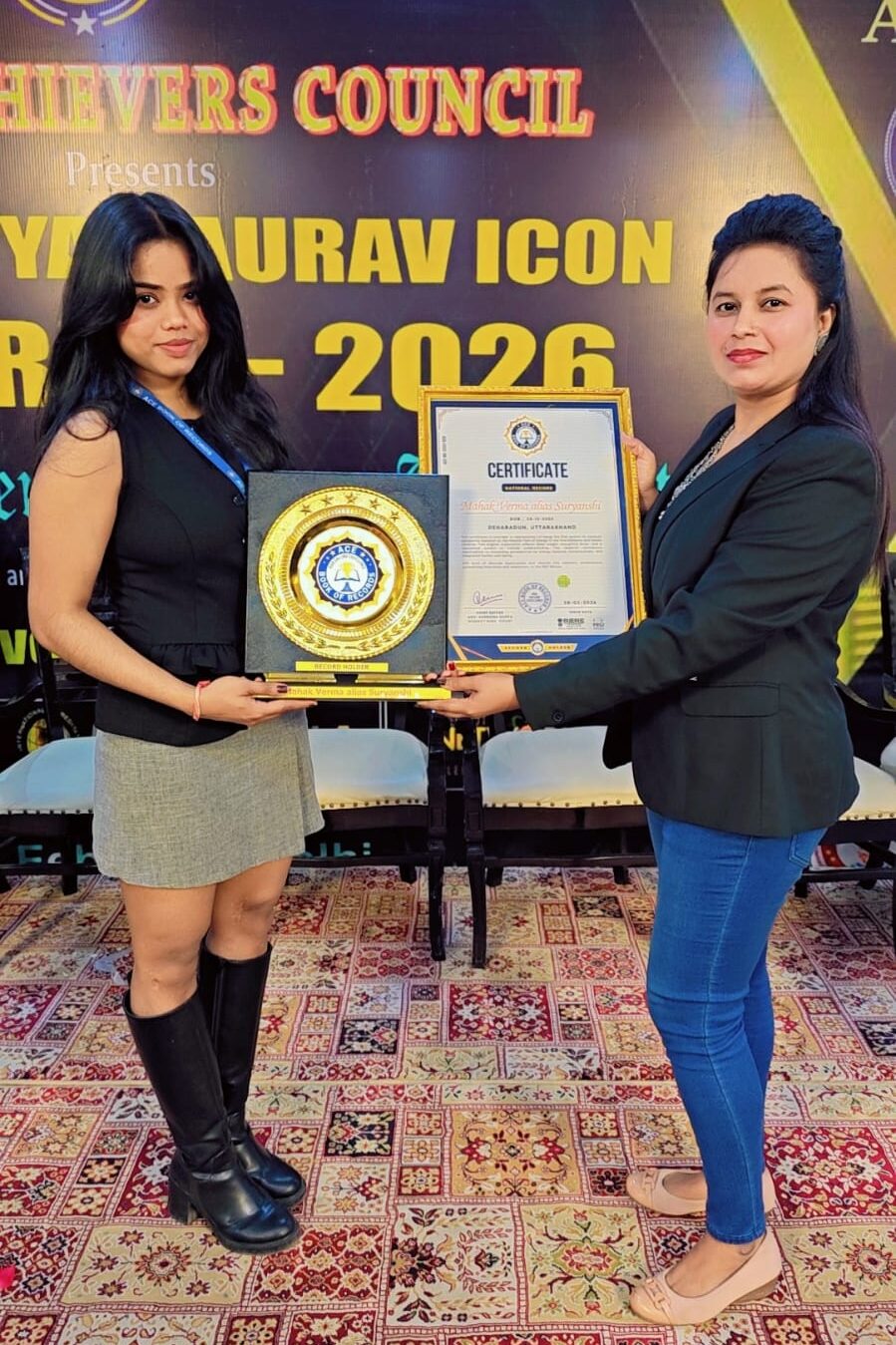
For this pioneering exploration, Mahak Verma (Suryanshi) received a National Record recognition from ACE Book of Records for being the first person to conduct research on the Natural Flow of Energy in the Five Elements and Seven Chakras.
The recognition acknowledges the originality of the work and its contribution to expanding discussions around energy balance, consciousness, and integrated human well-being.
By documenting such research, ACE Book of Records highlights intellectual curiosity and encourages individuals to explore meaningful ideas across disciplines.
Why This Research Matters Today
In today’s fast-paced world, people increasingly look for ways to reconnect with balance and self-awareness. Concepts related to energy flow, mindfulness, and holistic health have gained global interest.
Research like this contributes to that conversation by encouraging individuals to think about:
- The relationship between nature and human energy systems
- The importance of balance in physical, mental, and emotional health
- How traditional knowledge can inspire modern perspectives on well-being
While science continues to explore these ideas in depth, studies like this open new avenues for dialogue and curiosity.
Editor’s Take
Some of the most interesting ideas emerge where ancient wisdom meets modern thinking. Mahak Verma’s research reflects that intersection.
By exploring the natural flow of energy through the five elements and seven chakras, the work invites readers to reconsider how human well-being connects to nature, awareness, and balance.
Research like this does not claim final answers. Instead, it asks thoughtful questions, and that curiosity is often the starting point for deeper understanding.
Frequently Asked Questions (FAQs)
What are the Five Elements in Indian philosophy?
The Five Elements, or Pancha Mahabhuta, are Earth, Water, Fire, Air, and Space. They represent the fundamental components of nature and are believed to influence physical and energetic balance.
What are the Seven Chakras?
Chakras are traditionally described as energy centers in the human body, each linked to different emotional, physical, and spiritual aspects of life.
Who conducted this research?
The research was conducted by Mahak Verma, also known as Suryanshi, whose work received national recognition.
Why is this research considered significant?
It explores a unique perspective on how natural energy flow and human awareness may connect, contributing to discussions around holistic understanding and well-being.
What is ACE Book of Records?
ACE Book of Records is an international recognition platform that documents unique achievements across areas such as science, arts, culture, education, innovation, and social impact.
How does ACE verify records?
Record submissions are reviewed through documentation, evidence verification, and evaluation of originality and significance.
Who can apply for a record recognition?
Individuals, researchers, organizations, and institutions can submit unique achievements for recognition.
Why does ACE recognize research achievements?
Recognizing research encourages innovation, curiosity, and knowledge sharing across disciplines.
Ideas that explore new perspectives deserve to be documented and shared. If you or someone you know has conducted unique research, created a meaningful project, or achieved something extraordinary in science, culture, or creativity, consider submitting it to ACE Book of Records.
Celebrating innovative thinking helps inspire future researchers, thinkers, and creators around the world.
